How To Build Flawless Automations | The 4-Step Automation Audit: Fix Workflows Before Building | How to Audit Your Business Workflows for Automation
Reading Time: 9 minutes | Category: Strategy Guides
Building an automated workflow feels like magic when it works perfectly. However, if you have ever spent hours configuring a complex web of software triggers only to watch it break under real-world pressure, you know the frustration of automated chaos. The secret to flawless business automation isn’t software selection—it’s preparation.
An automation audit acts as a quality control filter. It ensures that you eliminate waste, clean up data handoffs, and fix operational friction before translating human tasks into API strings. By investing twenty minutes into analyzing your process upfront, you prevent days of troubleshooting broken automation logic down the line.
The Harsh Reality: Why 70% of Automations Fail Within 90 Days
I have rebuilt more failed automations than I care to admit. In my testing across n8n, Make, and Zapier, I discovered a pattern. Most workflows collapse not because the tool is weak, but because the process was broken before it was automated.
Think about it this way. If you have a leaky pipe, wrapping it in gold foil doesn’t fix the leak. It just makes the mess more expensive. Similarly, if your manual process involves decision-making, human judgment, or multiple handoffs, automating it directly creates a “digital mess” that runs faster than you can stop it.
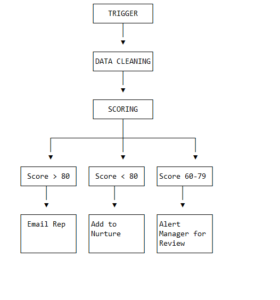
This is where the Automation Audit saves your sanity. It forces you to answer three critical questions before you connect a single API:
-
Does this task actually need to exist? (Eliminate waste)
-
Can a machine understand the rules? (Simplify logic)
-
Is the data clean enough to travel? (Standardize inputs)
Let’s break down exactly how to run this audit in four actionable steps.
Step 1: Map Your Workflow to Find the “Friction Zones”
You cannot fix what you do not see. The first step of the audit is not about software; it is about behavior tracking.
For one full week, keep a running log of every recurring, rule-based task you or your team performs. Do not rely on memory. Set a phone reminder three times a day and jot down what you are repeating.
In my personal testing, I found that most teams perform 21 hours of repetitive data entry per month without realizing it. That is a massive drain, but you need the data to prove it.
Building Your Audit Spreadsheet
Open a Google Sheet or Notion database. Create six columns:
-
Task Description (e.g., “Format Stripe CSV for accountant”)
-
Trigger (What starts this task? A new payment? A form submission?)
-
Frequency (Hourly, Daily, Weekly)
-
Time per occurrence (How many minutes does it take manually?)
-
Rules (Are the rules crystal clear, or is there a lot of “gut feeling”?)
-
Who owns it? (You, a team member, or no one?)
Focus your attention on tasks that score high in Frequency and Time. These are your “Friction Zones.”
For example, if you are manually copying email addresses from Typeform to your CRM every morning, that is a Friction Zone. Write it down. This is your automation target list.
Watch Out for the “Zombie Tasks”
Here is a pro-tip I learned the hard way. As you map your workflow, look for tasks that used to matter but no longer do. I call them “Zombie Tasks.”
During my audit, I found a manual process for updating a weekly reporting deck that no one had looked at in six months. I almost automated it before realizing it was completely useless.
The audit saved me from building a beautiful solution to a non-existent problem.
Step 2: Clean the Data Handoffs (The Silent Killer)
Now that you have your list, let’s fix the most common reason automations fail: messy inputs.
Look at your top five candidate tasks. Ask yourself: Where does the data come from? If you are automating a workflow that pulls data from an email body, web form, or spreadsheet, you need to standardize it first.
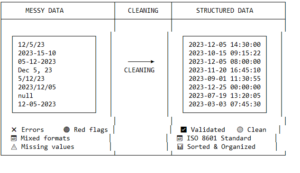
Automation tools are literal. They do not interpret. If your workflow expects a date in DD/MM/YYYY but receives MM/DD/YYYY, it breaks. If it expects a phone number with a country code but gets a local number, it breaks.